

Last Updated: October 5, 2026
High Quality Steel Types for Blades: 420J2 vs 440C
When choosing high quality steel types for blades, two stainless grades do most of the work: 420J2 and 440C or D2. At Ruddock Bros., our folding knives use 420J2, while our fixed blades and kitchen knives use 440C or D2.
420J2 is a low-carbon, high-chromium stainless steel. It resists rust well, takes a keen edge quickly, and stays tough even when rolled thin, vital on a folding knife, where the blade must be ground narrow enough to nest inside the handle.

440C is a high-carbon stainless steel with strong wear resistance, holding an edge longer than 420J2 while shrugging off moisture. D2 is a tool steel with even more carbon and chromium, built for extended edge holding and hard use. Both suit a full-tang fixed blade or kitchen knife, where the steel can be thicker.
Steel |
Typical Use |
Edge Retention |
Corrosion Resistance |
Toughness |
|---|---|---|---|---|
420J2 |
Folding knives |
Moderate |
High |
High at thin gauge |
440C |
Fixed blades, kitchen knives |
High |
High |
Good |
D2 |
Fixed blades, hard-use knives |
Very high |
Medium |
Good |
440C vs D2 Steel: Benefits for Fixed Blades and Kitchen Knives
For fixed blades and kitchen knives, 440C and D2 both deliver the edge holding a full-tang blade is built to use.
440C offers a balanced package: high chromium gives strong corrosion resistance, so a kitchen knife facing acidic ingredients and regular washing holds up well.
D2 pushes edge retention further. Extra carbon and chromium form hard carbides that resist wear, so a D2 blade keeps cutting after 440C would dull, a strong choice for hard-use fixed blades.
The trade-off: D2 has slightly less corrosion resistance than 440C because more chromium is tied up in carbides rather than free to resist rust.
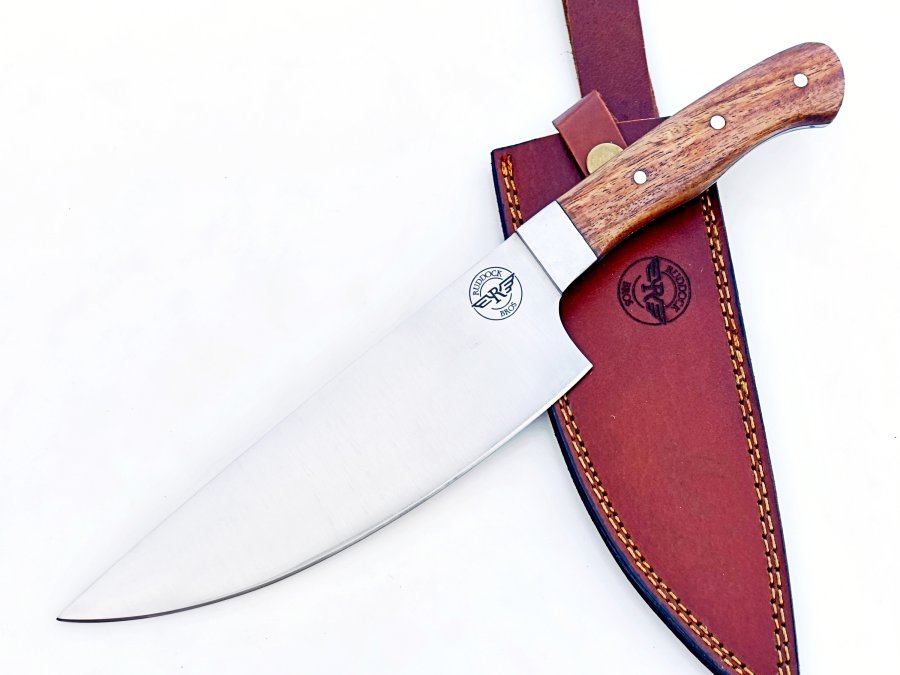
Knife Steel Corrosion Resistance and Edge Retention Compared
Corrosion resistance and edge retention pull against each other, understanding that tension is key to picking the right steel.
420J2 wins on corrosion resistance. High chromium and lower carbon mean more free chromium to fight rust, exactly what a folding knife needs in a pocket or pack.

440C balances both, holding an edge longer than 420J2 while keeping strong corrosion resistance, ideal for kitchen knives facing moisture and acids.
D2 leads on edge retention, with the highest wear resistance of the three and the lowest corrosion resistance. For a fixed blade that sees hard use and gets wiped down, that's a fair trade.
None of these three is "best" in isolation. The right pick depends on the blade's thickness, its job, and how you'll care for it. That's why we match 420J2 to our folding knives and 440C or D2 to our fixed blades and kitchen knives.
Frequently Asked Questions
Is D2 steel better than 440C?
D2 and 440C each have strengths. D2 offers higher edge retention and wear resistance, making it a strong choice for hard-use fixed blades and kitchen knives that see frequent cutting. 440C provides a better balance of corrosion resistance and toughness, so it resists rust more readily in humid kitchens or outdoor environments. Both are high-quality stainless grades; the right pick depends on whether you prioritize edge holding or stain resistance for your tasks.
What are the benefits of 420J2 steel in a folding knife?
420J2 is a tough, corrosion-resistant stainless steel that performs well in thin, flexible blades. Because folding knives require a thinner gauge than full-tang fixed blades, 420J2's combination of ductility and rust resistance makes it ideal for everyday-carry folders. It sharpens easily, resists staining from sweat and moisture, and holds a usable edge for routine cutting tasks like opening packages, slicing cord, or prepping kindling on a hike.
How should you care for a 420J2, 440C, or D2 blade?
Wipe the blade dry after use, especially if it has contacted acidic foods or moisture. For 420J2 and 440C, a light coat of food-safe oil on the blade and pivot area prevents rust during storage. D2 benefits from the same drying routine and occasional honing to maintain its edge. Avoid soaking any knife in water, and store folding knives slightly open to let air circulate. With basic care, all three steels deliver long service life.
Choosing the right steel for a blade is really about matching the material to the job, and that's the difference between a knife you replace and one you hand down. Ruddock Bros. has built cutlery on that principle since 1955, using 420J2 for folding knives and 440C or D2 for fixed blades and kitchen knives, backed by a lifetime guarantee and free shipping on orders over $150. Explore our handcrafted collection and find a blade built to last.